
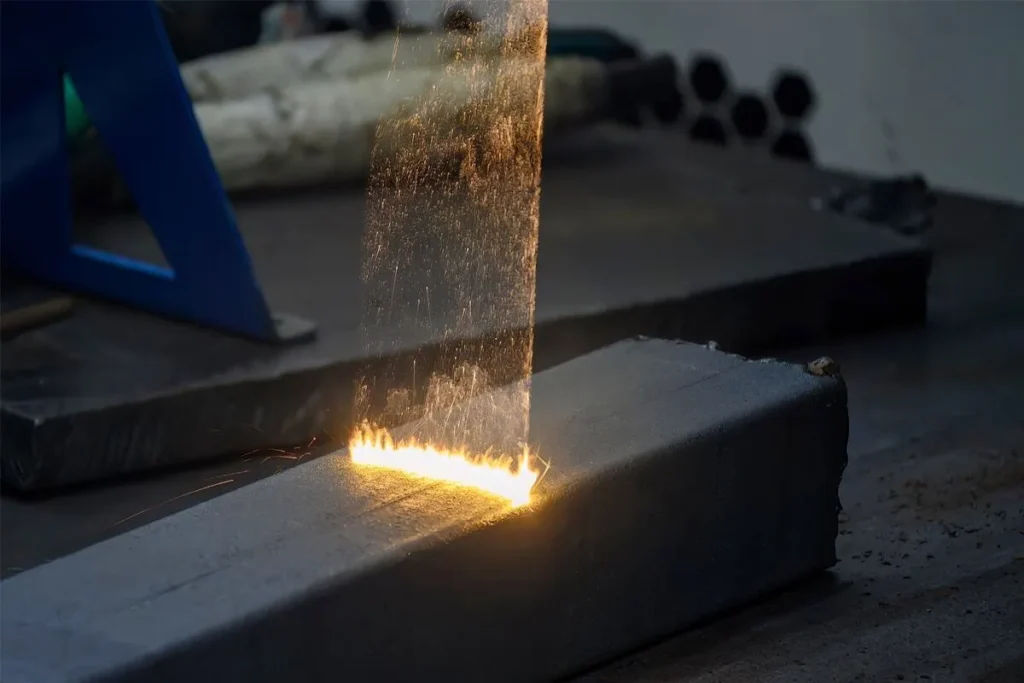
Laser cleaning is an advanced, non-contact method of removing contaminants, coatings, rust, or residues from a variety of surfaces. Unlike traditional cleaning methods, which rely on abrasive materials, chemicals, or mechanical scrubbing, laser cleaning utilizes highly focused light energy to precisely clean surfaces without causing damage. Its precision, efficiency, and environmentally friendly nature have made it increasingly popular in industrial, manufacturing, and historical restoration applications across Wisconsin and surrounding states.
Understanding how laser cleaning works can help facility managers, maintenance teams, and industrial professionals make informed decisions about adopting this technology for their cleaning and surface preparation needs.
The Science Behind Laser Cleaning
How Light Energy Transforms Contaminants
Laser cleaning works by emitting a concentrated beam of light at a specific wavelength and intensity. This energy is absorbed differently by the contaminants on a surface compared to the material underneath. When the laser energy strikes the surface, it rapidly heats and vaporizes contaminants such as rust, paint, grease, oxides, or other residues, effectively lifting them away without touching the base material.
This non-contact approach eliminates the risk of scratches, deformation, or other damage commonly associated with abrasive methods. Additionally, because the process is so precise, operators can target specific areas without affecting nearby components, which is especially important for delicate machinery, electronics, molds, or tools.
The laser beam is typically delivered using a scanning system or handheld device that allows technicians to adjust the intensity, pulse duration, and speed based on the surface type and contamination level. These parameters ensure that the energy is absorbed efficiently by the unwanted layer while leaving the underlying material intact.
Types of Lasers Used in Cleaning
Laser cleaning systems can vary depending on the wavelength, pulse duration, and power of the laser. The most commonly used types in industrial applications include:
- Pulsed fiber lasers: Known for precision and efficiency, these are ideal for delicate surfaces and electronics.
- Diode lasers: Compact and energy-efficient, suitable for light-duty cleaning and fine detail work.
- Nd:YAG lasers: High-power lasers effective for heavy-duty cleaning, rust removal, and thick coatings.
The choice of laser depends on the specific application, the type of contaminant, and the material of the surface. High-power lasers can remove stubborn rust or thick paint layers quickly, while lower-power lasers are used for more delicate surfaces where precision is critical.
The Laser Cleaning Process
Step-by-Step Overview
Laser cleaning is a controlled, multi-step process that ensures effective removal while protecting the underlying surface. The key steps include:
- Surface Assessment: Technicians evaluate the surface to identify the type of contaminant, its thickness, and the material beneath. This helps determine the appropriate laser settings.
- Parameter Selection: Based on the assessment, the operator sets the laser’s pulse duration, frequency, and power level. These settings are critical for achieving optimal cleaning without damage.
- Laser Application: The laser is applied to the surface either through a handheld device or automated scanning system. The beam rapidly heats the contaminants, causing them to vaporize or dislodge.
- Inspection and Finishing: After cleaning, the surface is inspected for residual contaminants. Additional passes may be performed if necessary. The result is a clean, ready-to-use surface with minimal waste.
This process is adaptable to a wide variety of industrial scenarios, from preparing metal parts for coatings to restoring historical artifacts without abrasion.
Advantages of Laser Cleaning
Laser cleaning offers numerous benefits over traditional cleaning methods, making it highly attractive to industrial facilities in Wisconsin and surrounding states. Some of the key advantages include:
- Non-Destructive: The surface remains intact, making it ideal for delicate equipment or sensitive components.
- Chemical-Free: No solvents or hazardous chemicals are required, reducing environmental impact and workplace hazards.
- Precision: Operators can target specific areas, avoiding damage to nearby surfaces.
- Efficiency: Cleaning can be faster than mechanical or chemical methods, especially for complex or hard-to-reach areas.
- Reduced Waste: Because contaminants are vaporized or dislodged, there is little secondary waste to manage.
These benefits translate into safer workplaces, lower disposal costs, and improved operational efficiency for manufacturers, industrial plants, and restoration projects.
Common Applications in Industry
Laser cleaning is highly versatile and is used across a range of industries, including:
- Manufacturing and Metal Fabrication: Removing rust, scale, or old coatings from steel, aluminum, and other metals.
- Aerospace: Cleaning precision components without causing wear or micro-damage.
- Automotive: Surface preparation for repainting or coating, as well as rust removal on high-value components.
- Electronics: Removing oxidation or residues from circuit boards or delicate parts.
- Historical Restoration: Safely cleaning artifacts, statues, or monuments without damaging the original material.
Each application benefits from the non-contact nature and precision of laser cleaning, ensuring optimal results with minimal downtime.
Safety Considerations
While laser cleaning is non-contact and environmentally friendly, it requires trained operators to ensure safety. High-powered lasers can pose risks to eyes and skin, and proper protective equipment and protocols must be followed. Industrial facilities must also account for ventilation or extraction systems to safely manage vaporized contaminants, particularly when removing coatings that may release harmful compounds.
Compliance with OSHA and state safety standards is essential for operators in Wisconsin and surrounding states. Working with trained professionals ensures the cleaning process is both safe and efficient.
Comparison to Traditional Cleaning Methods
Traditional cleaning methods such as sandblasting, chemical stripping, or mechanical scraping have long been used for surface preparation and contaminant removal. While effective, these approaches have significant drawbacks:
- Abrasive Damage: Mechanical methods can scratch or deform delicate surfaces.
- Chemical Exposure: Solvents and chemical strippers create hazardous waste and pose health risks.
- Time-Consuming: Extensive preparation, cleanup, and safety measures can extend project timelines.
- Limited Precision: Hard-to-reach areas may remain contaminated, or surrounding surfaces may be unintentionally affected.
Laser cleaning addresses all of these issues, providing a precise, non-destructive, and environmentally friendly alternative that minimizes downtime and waste.
Why Facilities Should Consider Laser Cleaning
Industrial facilities, manufacturing plants, and restoration projects increasingly adopt laser cleaning because of its efficiency, safety, and versatility. By investing in laser cleaning technology, organizations can:
- Extend the lifespan of equipment and components by removing contaminants without causing wear.
- Reduce environmental impact by eliminating the need for chemical cleaners.
- Minimize operational downtime with faster, more efficient cleaning processes.
- Improve worker safety by reducing exposure to hazardous dust or chemicals.
For facilities across Wisconsin and neighboring states, laser cleaning provides a forward-looking solution that meets both operational and environmental goals.
Conclusion
Laser cleaning is a revolutionary method that combines precision, safety, and environmental responsibility. By harnessing the power of focused light energy, it removes rust, paint, and other contaminants without damaging the underlying surface. Its applications span multiple industries, from aerospace and automotive to historical restoration, offering unmatched efficiency and quality.
For facilities in Wisconsin and surrounding states, understanding how laser cleaning works is the first step toward safer, faster, and more effective industrial maintenance. By incorporating professional laser cleaning into their maintenance programs, industrial operations can protect valuable equipment, reduce downtime, and achieve superior cleaning results without the hazards associated with traditional methods.