
Industrial Laser Cleaning Services
What Is Laser Cleaning?
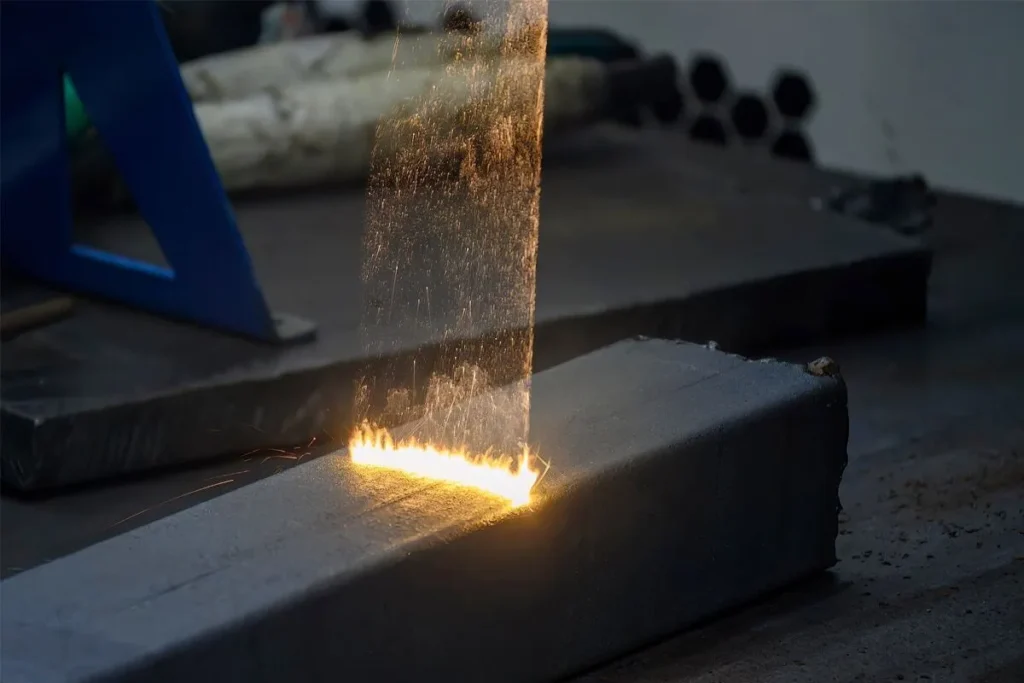
Laser cleaning uses focused pulses of laser energy to remove unwanted material from a surface. The contaminant absorbs the energy and is released as fine particles, vapor, or fragmented material that can be captured using appropriate extraction and collection equipment.
Unlike conventional abrasive blasting, the process does not propel sand, grit, or another abrasive against the surface. It also avoids liquid chemical stripping agents and wastewater. Laser power, pulse frequency, scan speed, and beam pattern can be adjusted according to the substrate and material being removed.
Industrial laser cleaning can provide:
- Precise removal from targeted areas
- No abrasive blasting media
- A dry, non-contact cleaning process
- Adjustable settings for different surfaces
- Limited impact on surrounding material when properly controlled
- Reduced secondary material compared with abrasive blasting
- Surface preparation without creating a heavy abrasive profile
- Mobile service at facilities and job sites
Laser cleaning still produces removed particles, fumes, or residue that must be controlled. It also requires a managed laser work area, appropriate protective measures, and an evaluation of reflective surfaces and nearby operations.
Interstate Blasting evaluates each project to determine whether laser cleaning is appropriate or whether another method will provide a safer, faster, or more economical result.
What Can Laser Cleaning Address?
Localized Rust and Oxidation
Remove rust and oxide layers from targeted metal surfaces without blasting the entire component or creating an aggressive surface profile.
Paint and Coating Residue
Strip compatible paint, protective coatings, overspray, and surface films from selected areas while maintaining greater control over the underlying material.
Weld Contamination
Remove oxidation, discoloration, residue, and surface contaminants before or after welding to support inspection, bonding, finishing, or additional fabrication.
Tool and Mold Buildup
Clean residue, release agents, carbon, and production buildup from molds, dies, tooling, and detailed equipment components.
Contaminated Precision Components
Target oils, films, oxides, and other unwanted material on components where conventional abrasive blasting may be too aggressive or difficult to control.
Difficult Selective Cleaning
Clean seams, edges, joints, markings, detailed features, and specific sections of a larger component without treating the entire surrounding surface.
Where Laser Cleaning Works Best
Laser cleaning is most valuable when precision matters more than high-volume material removal. It can be used to clean selected areas, prepare surfaces for welding or bonding, restore detailed components, and remove relatively thin layers of rust, oxide, or coating.
The process works primarily on metal and other compatible surfaces. Its suitability depends on the substrate, contaminant, coating thickness, reflectivity, geometry, desired production rate, and final surface requirements.
Laser cleaning may not be the most efficient choice for every project. Large structures, thick coatings, widespread corrosion, or surfaces requiring a pronounced profile may be better suited to mobile media blasting.
- Metal Parts and Industrial Equipment
- Weld and Bonding Preparation
- Molds, Dies, and Tooling
- Detailed Restoration Work
Industries That Use Laser Cleaning
Manufacturing
Metal Fabrication and Welding
Automotive and Transportation
Tool, Die, and Mold Operations
Precision Component Manufacturing
Energy and Utilities
Industrial Maintenance
Our Industrial Laser Cleaning Process
Evaluate the Material and Cleaning Goal
Interstate Blasting reviews the substrate, contaminant, coating thickness, surface geometry, access, reflectivity, and desired result. A test area may be completed to determine whether laser cleaning can achieve the required outcome at a practical production rate.
Establish the Work Zone and Settings
The crew establishes a controlled laser work area and plans for access restrictions, protective equipment, surface reflections, fume extraction, ventilation, and nearby operations. Laser power, pulse frequency, scan speed, and beam pattern are adjusted for the specific surface.
Clean, Extract, and Inspect
The laser is moved systematically across the selected area while removed particles and fumes are captured using appropriate extraction equipment. The surface is then inspected to determine whether the cleaning objective has been achieved or another pass is required.
Removing Localized Rust From Precision Tooling
A Midwest manufacturing facility is preparing several large steel tooling components for inspection and continued production. Localized rust and oxidation have developed around edges, bolt locations, seams, and recessed areas after extended storage.
The facility wants to remove the corrosion without blasting the entire tool, introducing abrasive media into the production area, or altering detailed surfaces that remain in usable condition.
A mobile laser cleaning crew evaluates the tooling and completes a test area to identify suitable operating settings. A controlled work zone and fume-extraction system are established, and nearby reflective surfaces are addressed before cleaning begins.
The laser is directed only at the affected areas, removing the oxidation from edges, seams, and detailed features. The components are inspected after cleaning so the facility’s maintenance team can evaluate their condition and proceed with preservation, repair, or return-to-service procedures.
This representative scenario illustrates a potential laser cleaning application. Actual equipment, safety controls, production rates, and results depend on the substrate, contaminant, geometry, access, and required finish.
Related Industrial Cleaning and Surface Services
Media Blasting
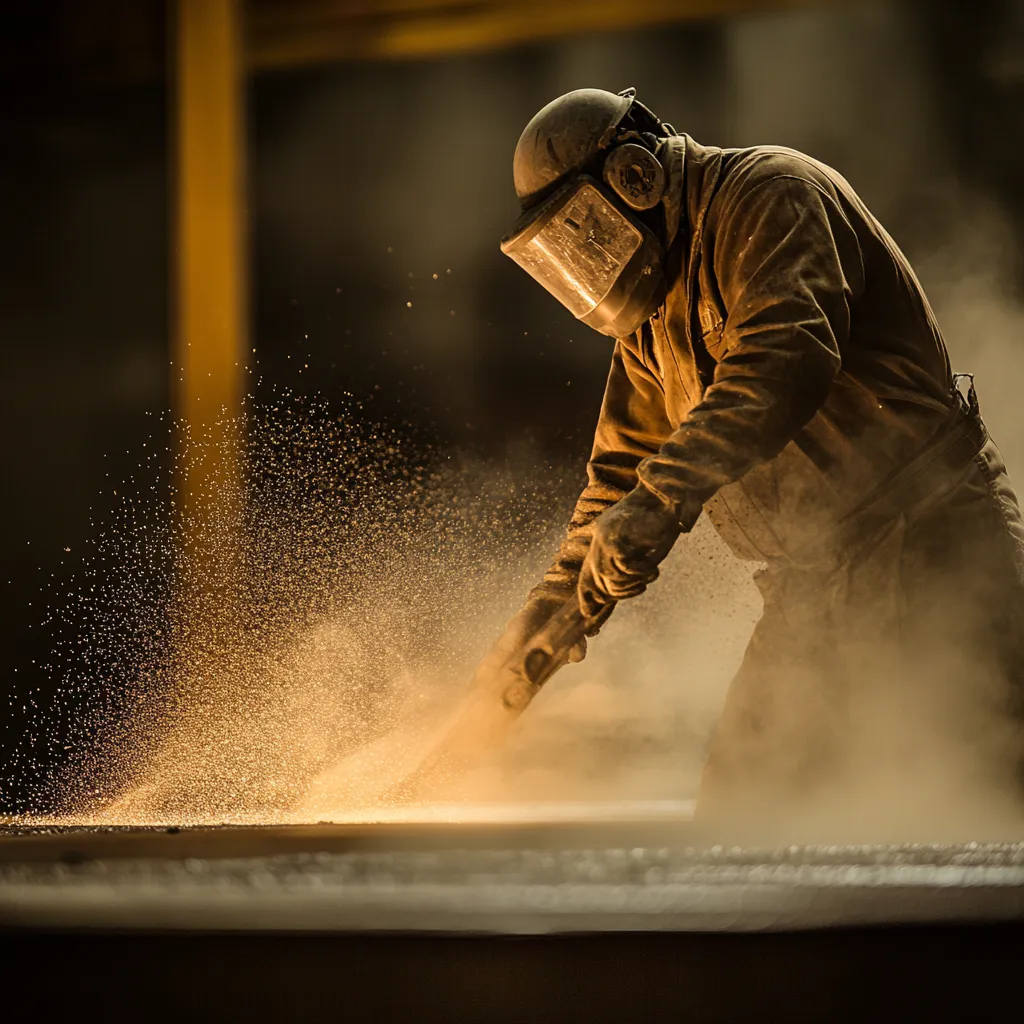
For larger surfaces, heavy corrosion, thick coatings, or projects requiring a defined surface profile, mobile media blasting and sandblasting may provide a faster and more economical option.

Dry Ice Blasting

Industrial Cleaning
When a project involves multiple contaminants, surfaces, or cleaning methods, industrial cleaning services can provide a coordinated approach for equipment, production areas, and facility surfaces.

Industrial Painting and Protective Coatings
After rust, oxidation, or existing coatings have been removed, industrial painting and protective coating services can help protect properly prepared metal from renewed corrosion and environmental exposure.
Mobile Laser Cleaning Across Wisconsin and the Midwest
Interstate Blasting is based in Lodi, Wisconsin, and travels throughout five Midwest states to provide on-site laser cleaning for industrial equipment, machinery, tooling, fabricated components, and other suitable surfaces. Service availability depends on the project scope, surface, production rate, travel requirements, and site conditions.
Wisconsin
Interstate Blasting provides mobile laser cleaning throughout Wisconsin, including Madison, Milwaukee, Green Bay, the Fox Cities, Waukesha, Janesville, Oshkosh, Eau Claire, La Crosse, Wausau, and surrounding communities.
Illinois
Our mobile crews travel throughout Illinois for qualifying laser cleaning projects in Chicago, Rockford, Aurora, Naperville, Bloomington–Normal, northern Illinois, central Illinois, and surrounding industrial markets.
Iowa
We provide industrial laser cleaning throughout Iowa, including Des Moines, Cedar Rapids, Iowa City, Davenport, Sioux City, the Quad Cities, and nearby manufacturing markets.
Michigan
Interstate Blasting serves qualifying industrial and commercial laser cleaning projects throughout Michigan. Mobilization, equipment, work-zone requirements, and scheduling are coordinated according to the project.
Minnesota
Mobile laser cleaning is available throughout Minnesota, including Minneapolis–Saint Paul, Rochester, Duluth, and surrounding communities. Each project is evaluated to determine whether laser cleaning is the most practical method for the surface and material being removed.